
Supervisory analytics platform for financial regulators
Line4 turns the returns a supervisor already collects into analytics supervisors use. Every return is validated as it lands and stored as structured facts, each firm is shown against its peers and its own history down to the underlying return, AI reads the filings and attachments behind the numbers, and supervisors ask questions in plain language with answers that link back to the source. Rules make the calls that must be repeatable; AI surfaces what needs a supervisor; supervisors decide.
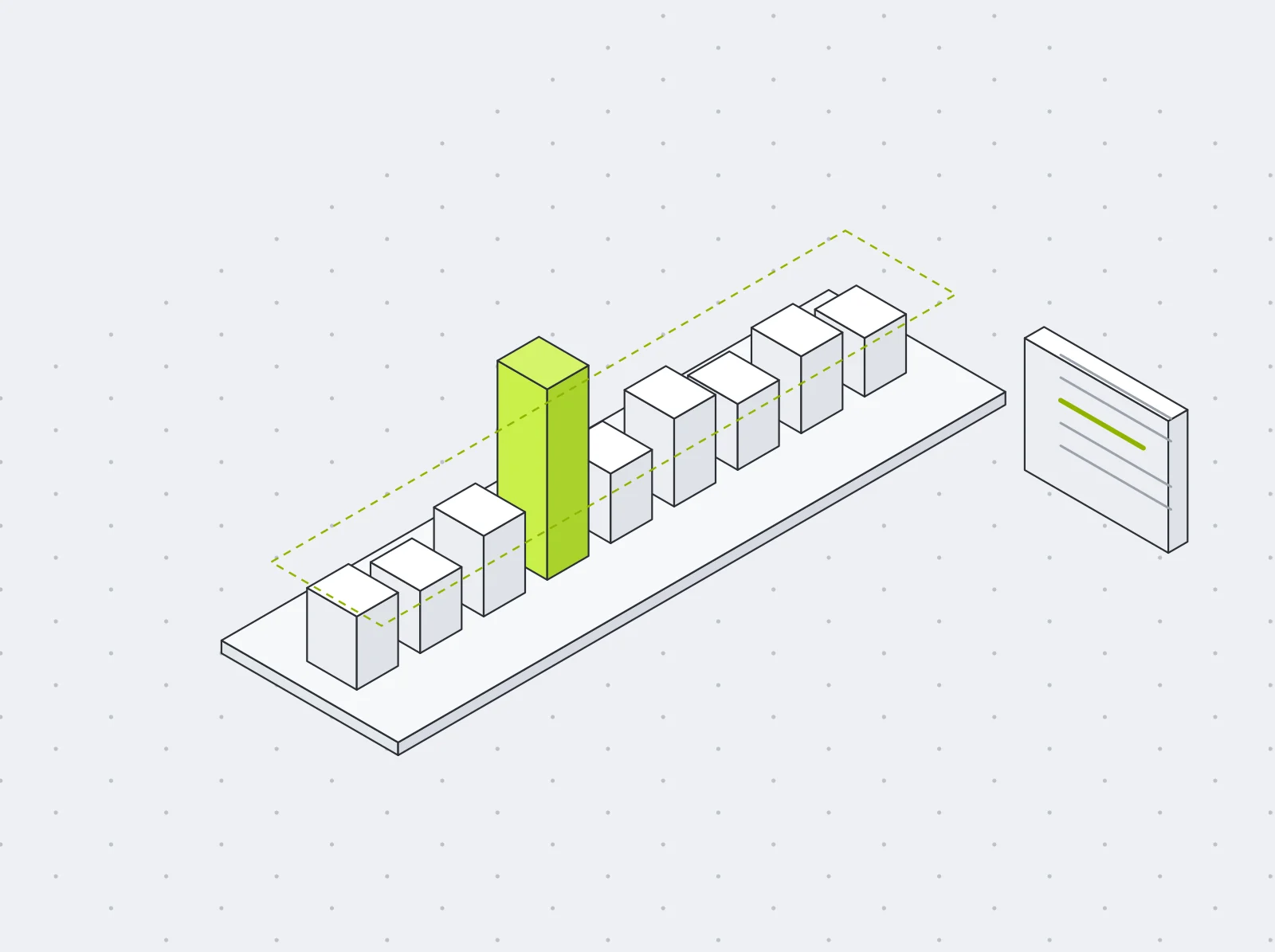
The problem today
- Returns are kept as files, so comparing firms means rebuilding spreadsheets every quarter.
- Analytics run on data nobody validated, so the outlier often turns out to be a filing error.
- A finding cannot be traced back to the return and rule behind it, so it is hard to defend.
How Line4 does it
- 01
Structured from the first filing
Returns are validated as they land and stored as structured facts, and an AI pipeline structures years of older spreadsheets so history and new data sit together.
- 02
Peers and history
Risk views across the supervised population, with each firm against its peers and its own history, and drill-down to the firm and the underlying return.
- 03
Ask in plain language
Supervisors query their own data conversationally, with answers that link back to the source, so analysis does not wait for a data team.
- 04
Findings you can defend
Deterministic rules make the calls that must be repeatable, and every finding traces to its data and rule. AI suggests; supervisors decide.
Proven in production
At an international financial regulator
- Years of AML supervision data at an international financial regulator structured from messy Excel templates by an AI pipeline.
- Regulator-ready analytics and a supervisor chatbot for AML supervision, now live, with self-serve insight for analysts.
- A prudential submissions portal with real-time validation in production at an international financial regulator.
We used to struggle to get anything across the line, and now things are flying through. People are reaching out to us. There’s a lot more trust built here.
Questions
What is a supervisory analytics platform?
Software that lets a financial supervisor analyse the data it collects from firms: comparing each firm with its peers and its own history, spotting outliers and trends, and tracing every finding back to the return behind it. The ECB, for example, describes supervisors who “conduct statistical analyses that facilitate peer comparison and benchmarking between banks” (ECB Supervision Newsletter, May 2025). Line4 supplies that on validated data.
Do we need a data warehouse first?
No. Line4 validates returns as they land and stores them in a structured model from the first filing, so analysis starts with the data you already collect. Older returns kept as spreadsheets can be structured by an AI pipeline and analysed alongside new ones.
What usually holds supervisory analytics back?
The BIS Financial Stability Institute, reviewing 71 SupTech tools for prudential supervision in 20 jurisdictions (FSI Insights 37), found that “limited data science skills of supervisors, data quality issues that underpin suptech models” and calibration hamper adoption. Line4 answers the first two directly: validation at submission fixes data quality at source, and plain-language questions let supervisors analyse without writing code.
Can supervisors ask questions without SQL?
Yes. Supervisors ask questions of their own data in plain language, and every answer links back to the return and data points it came from, so it can be checked.
Where does the data live?
Line4 runs in your own cloud tenancy, ideally Azure or AWS, using managed AI services such as Azure AI Foundry or Amazon Bedrock, so your data stays in your own environment. Where cloud is not an option, we can work on premises.
Do supervisors outside Europe run their own analytics platforms?
Yes. On 6 October 2022 the Reserve Bank of India launched DAKSH, its Advanced Supervisory Monitoring System, a web-based workflow application for monitoring compliance that also covers inspection planning, cyber incident reporting and management reports. Line4 gives a supervisor analytics on its own data, with plain-language questions and answers that link back to the source return.
Ready-made checks for the returns you already collect
Our returns library tracks 2,096 returns at 46 regulators in 33 jurisdictions, 665 of them in XBRL, with the format and validation rules for each.
Key terms and guides
More of the platform
- Regulatory data collection
- AML supervision
- Enforcement case management
- Insurance supervision
- Risk-based supervision
- AI review of regulatory returns
- Early-warning indicators
- Agentic triage of submissions
- Network and connected-party analysis
- Monitoring for unauthorised activity
- SupTech software: the whole platform
- XBRL software for regulators
- What is SupTech?
See supervisory analytics in Line4
A demo shows the real screens with sample data. If you want proof on your own data first, run a real filing through Line4 Check, free, with no call and no account.
Our view
RegTech and SupTech are converging on real-time supervision by 2030. Line4 is built for that: checks at the gate in seconds, AI you can audit, and a switch that takes a week.