
Monitoring for unauthorised activity and misleading promotions
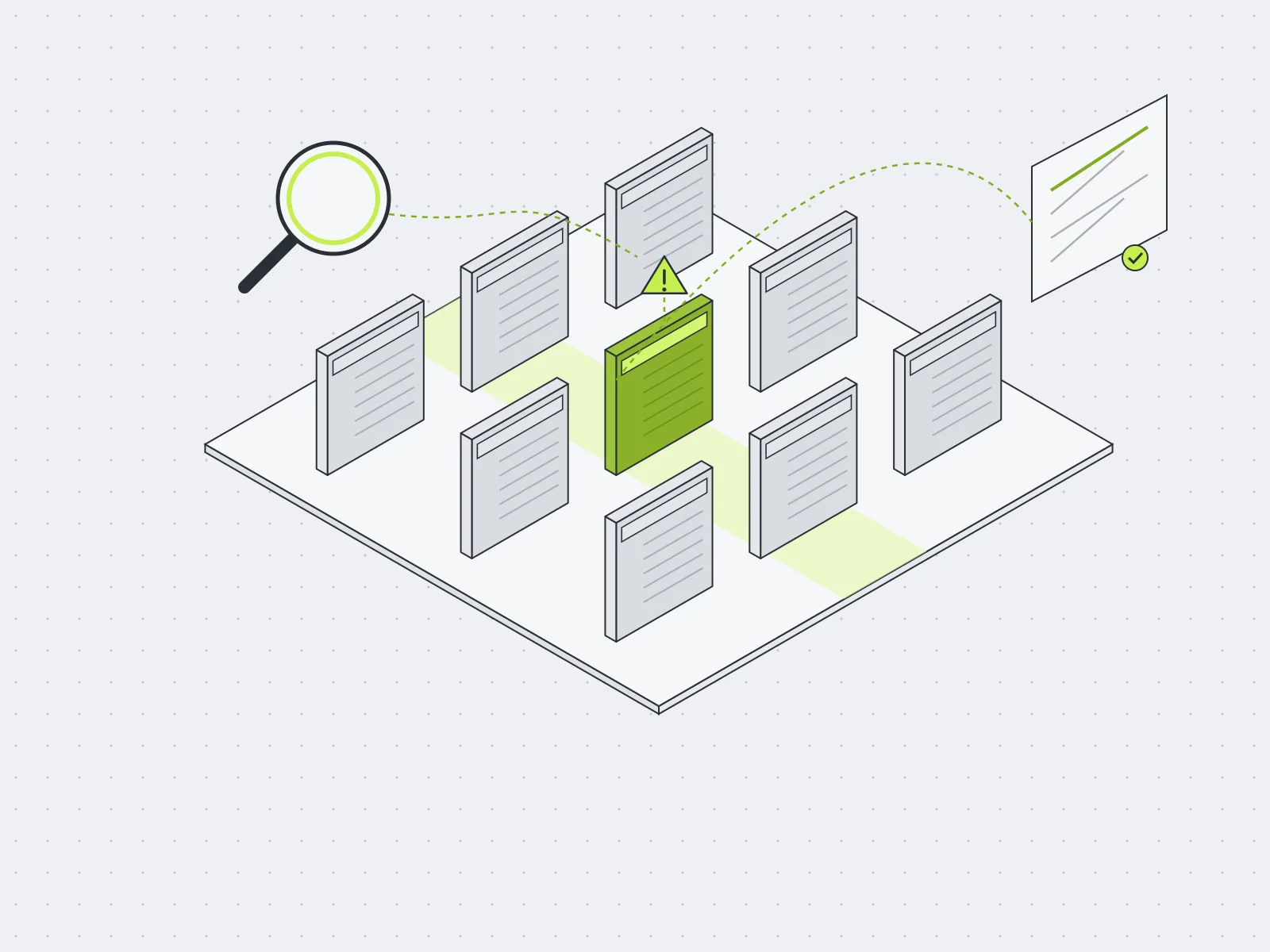
Monitoring for unauthorised activity means scanning websites, adverts and social media for firms offering financial services without permission, clones of authorised firms and promotions that break the rules. In Line4 Watchtower, deterministic rules match what is found against your register of authorised firms, AI reads the page and sorts it by likely breach, and every finding keeps a dated copy of the page as evidence. A supervisor decides whether to publish a warning, ask for a takedown or open a case.
The problem today
- Scam sites and adverts appear and vanish within days, faster than a team can find them by hand.
- Checking each name against the register of authorised firms is slow and easy to get wrong.
- By the time a case starts, the page is gone and the evidence with it.
How Line4 does it
- 01
Watch the right places
Searches, ad libraries, social media and reports from the public are collected in one queue, with the source and time of each find kept.
- 02
Check the register first
Deterministic rules match each name, domain and reference number against your register of authorised firms, so clones and unknown firms stand out the same way every time.
- 03
AI reads the page
AI reads what is on offer and flags likely breaches, such as unauthorised deposits or investments, missing risk warnings or a copied firm reference number, and links each flag to the words on the page.
- 04
Evidence, then a decision
A dated copy of the page is kept with every finding. A supervisor decides on a warning, a takedown request or a case, and the choice is kept in the evidence trail.
Line4 Watchtower
Line4 Watchtower does this: it finds anyone offering financial services online, runs 18 checks on each find and hands your supervisors cases with the evidence. See the demo video, the checks and the numbers from our own runs.
See Line4 Watchtower →Proven in production
At an international financial regulator
- Enforcement case management with a full audit trail, kickoff to live use in four months.
- Email-and-Excel enforcement workflows replaced at an international financial regulator.
- Regulator-ready analytics and a supervisor chatbot for AML supervision, now live, with answers that link back to the source.
We used to struggle to get anything across the line, and now things are flying through. People are reaching out to us. There’s a lot more trust built here.
Questions
What is monitoring for unauthorised activity?
Searching the places where people find financial products, such as websites, search results, adverts and social media, for firms that offer regulated services without permission, firms pretending to be authorised ones, and promotions that break the rules. It lets a supervisor warn the public and act before more people lose money.
What is a clone firm?
A scam that copies the name, address or reference number of a real authorised firm, so the register check a careful customer makes seems to pass. Matching contact details, domains and phone numbers against the register, not just the firm name, is how clones are caught.
Are supervisors already doing this?
Yes. The BIS Financial Stability Institute reported that “ASIC, the Bank of Mexico (BoM), and the FCA also employ a combination of web-scraping and text mining to audit promotional materials, prospectuses or financial advice documents disseminated by financial institutions” (FSI Insights No 19, The suptech generations, October 2019). The FCA says it uses data and technology to check “around 480,000 new websites that could be providing or promoting financial services or products without our permission” (Financial promotions data 2024, 7 February 2025).
How big is the problem?
Large and growing. The FCA issued 2,329 warnings about unauthorised or potentially scam firms in 2025, up from 2,240 in 2024 (FCA press release, 9 July 2026), and in 2024 its interventions led authorised firms to amend or withdraw 19,766 promotions. ASIC reports more than 25,000 investment scam and phishing websites taken down since its takedown service started in 2023 (media release 26-063MR), and CONSOB in Italy had blocked 1,816 websites since July 2019 (press release, 10 September 2026).
What does Line4 check on each find?
Line4 Watchtower runs 18 checks on every website, advert or social post it finds: whether the name and reference number are on your register, whether it clones an authorised firm, the domain’s age, where it is registered and hosted, whether it targets UK consumers, red-flag wording such as guaranteed returns, unrealistic return figures, cryptoasset promotions without the risk warning, payment by crypto wallet or gift card, pressure to act now, fund recovery offers, offers outside a firm’s permissions, other regulators’ warning lists, contact details, linked social accounts, details shared with other finds and copied text. Each result keeps the words or lookup behind it.
Who decides what happens to a finding?
A supervisor, every time. The system finds, matches and drafts. Publishing a warning, asking a platform to take a page down or opening an enforcement case stays with a person, and the evidence trail records who decided and on which evidence.
How does it connect to enforcement?
A finding that needs action becomes a case with the page copy, the register check and the AI notes already attached. In Line4 that case runs in the same casework system as the rest of enforcement, with a full audit trail.
Where does the data live?
Line4 runs in your own cloud tenancy, ideally Azure or AWS, using managed AI services such as Azure AI Foundry or Amazon Bedrock, so your data stays in your own environment. Where cloud is not an option, we can work on premises.
Ready-made checks for the returns you already collect
Our returns library tracks 2,096 returns at 46 regulators in 33 jurisdictions, 665 of them in XBRL, with the format and validation rules for each.
Key terms and guides
More of the platform
- Regulatory data collection
- AML supervision
- Enforcement case management
- Insurance supervision
- Risk-based supervision
- Supervisory analytics
- AI review of regulatory returns
- Early-warning indicators
- Agentic triage of submissions
- Network and connected-party analysis
- SupTech software: the whole platform
- XBRL software for regulators
- What is SupTech?
See monitoring for unauthorised activity in Line4
A demo shows the real screens with sample data. If you want proof on your own data first, run a real filing through Line4 Check, free, with no call and no account.
Our view
RegTech and SupTech are converging on real-time supervision by 2030. Line4 is built for that: checks at the gate in seconds, AI you can audit, and a switch that takes a week.